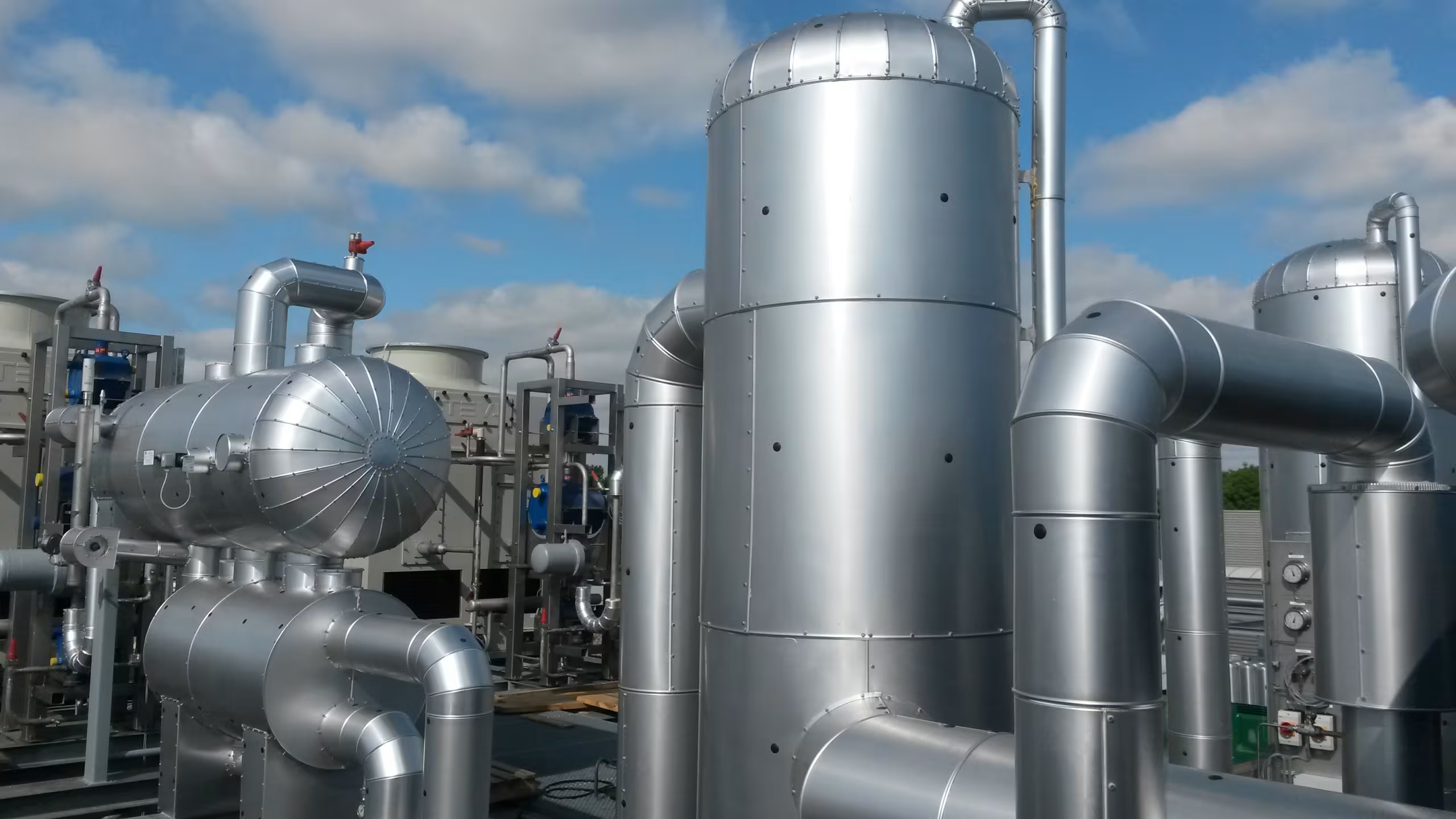
IVS manufactured several covers for our fire station, among them covers for radiators and equipment. In terms of surveying, execution, manufacturing and the final appearance the result is outstanding. Thank you for that on behalf of the Kummerow lakeside community. Genuine craftsmanship still exists here.
What is cold insulation?
Cold insulation protects every installation whose medium temperatures are lower than the ambient temperature — typically refrigeration and deep-freeze processes, food production or the chemical industry.
With a professional insulation thickness calculation we prevent condensation forming on pipework, vessels and apparatus, protect against corrosion and secure stable process temperatures in the long term. Two factors are decisive: the insulation thickness, which determines the energy transfer, and the vapour barrier against ingressing humidity. If either of them is specified incorrectly, the resulting damage is considerably more expensive than the investment in professional execution.
Since 1984 we have been carrying out cold insulation in the most varied industries, from food production in Mecklenburg-Western Pomerania to refrigeration technology on fishing and cruise ships. For the food industry we prefabricate stainless steel cladding in V2A/V4A quality to hygienic standards and recommend the right materials as early as the planning stage, matched to medium temperature, environment and hygiene requirements.
Where is cold insulation used?
Pipework carrying cold media: brine, glycol and refrigerant lines on which condensation has to be prevented reliably. This is one of the most frequent applications for our cold insulation: long pipe runs in the food, chemical and brewing industries in which cold media are transported over several hundred metres. Chilled water lines, glycol circuits in air conditioning systems and brine lines in deep-freeze plants are part of it too. We insulate every run with a suitable insulation thickness and a continuous vapour barrier, so that no thermal bridge and no condensation zone can form.
Food production: hygienically executed installations with stainless steel cladding in V2A/V4A for dairy, meat, fish and bakery production as well as for breweries. In a food environment what counts above all are surfaces that are easy to clean, tight cladding joints and a hygienic finish at valves, flanges and units. This is exactly where our own stainless steel prefabrication fits precisely: we manufacture cladding parts in V2A or V4A to measure and deliver them ready for installation to the site — no standard products from wholesale and no additional middlemen.
Cooling tunnels and cold stores: deep-freeze centres, central warehouses and temperature-critical logistics areas in which stable conditions are decisive. In large logistics halls several cooling circuits have to run in parallel without energy being lost through poorly insulated lines or vessels. Here we insulate both the incoming refrigerant and brine lines and the distributors, units and accumulators. For extensions or modernisations we carry out the work during ongoing operation, so that production and goods handling are not interrupted.
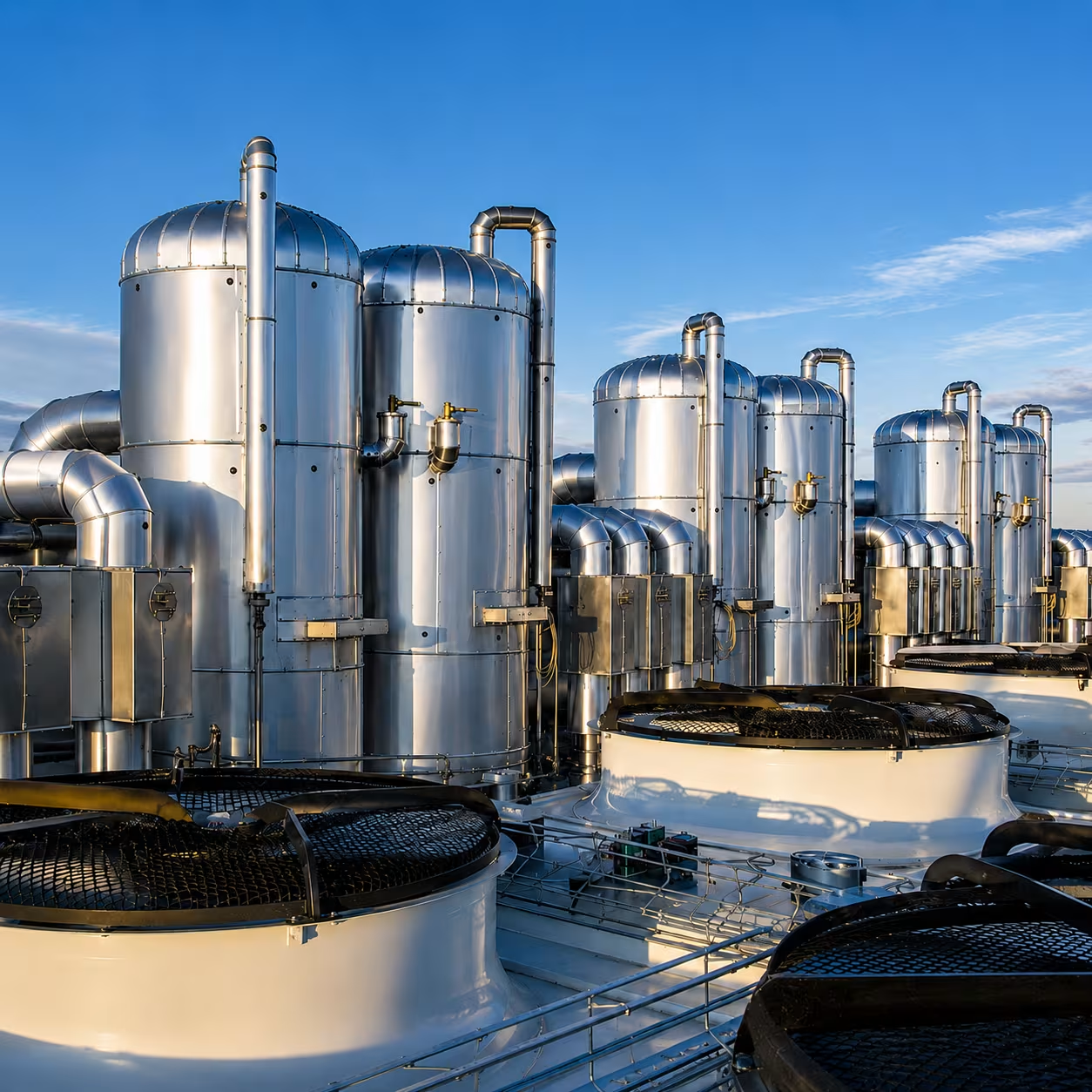
Vessels, heat exchangers and units: from storage vessels through evaporators and condensers to complete refrigeration machines, buffer tanks and pressure vessels. Each of these components has its own geometric and thermal requirements: curves, manholes, connecting nozzles and inspection hatches have to be insulated cleanly while remaining accessible. On-site surveying, prefabrication in Malchin and installation by our well-practised teams: everything from a single source. The result is precisely fitting cladding that follows the shape of the installation and secures maintainability for decades.
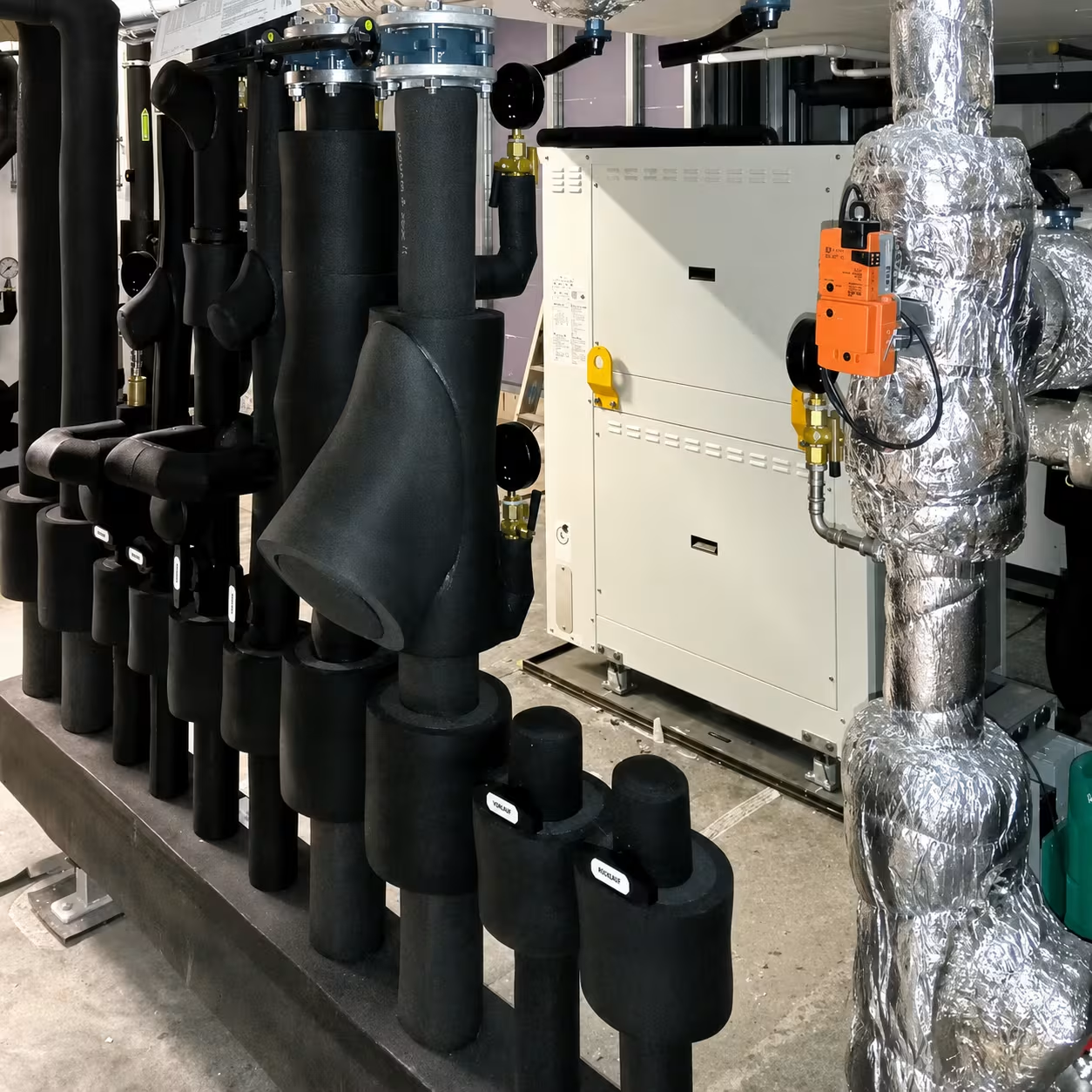
Uncompromising corrosion prevention (CUI protection): in industrial refrigeration technology we tolerate no weak points. We rely on diffusion-tight special materials that proactively prevent condensation and the dreaded corrosion under insulation (CUI). Installation is carried out by certified specialist fitters in strict compliance with the AGI work sheets.
Industries for cold insulation
From food producers and breweries to deep-freeze logistics and plant engineering companies: our clients come from sectors with high hygiene, energy and safety requirements. For every industry we have proven insulation solutions that work during ongoing operation.
-
Beverage industry & breweries
Hygienic insulation for the brewhouse, lager cellar and CO₂ recovery, cleanable V2A cladding surfaces and stable process temperatures at full energy efficiency.
-
Dairy processing
Condensation-free insulation systems for CIP plants, pasteurisers and storage tanks. Cleanable V4A execution to HACCP requirements, feasible during ongoing dairy operation.
-
Food processing
HACCP-compliant insulation for meat, fish, bakery and deep-freeze production. Stainless steel jackets in V2A or V4A, hygienically closed and ready for audits.
-
Logistics & cold storage centres
Energy efficiency and active fire protection for cold stores and logistics centres.
Insulation materials & products
We use certified insulation materials that suit the respective temperature class, medium density and hygiene requirement: mineral wool, PUR/PIR rigid foam, calcium silicate or elastomeric foams.
Cladding is done with stainless steel, aluminium or composite cladding sheets. For hygienically executed applications in the food industry we supply V2A or V4A stainless steel from our own prefabrication.
Our execution follows the recognised standards of the industry: AGI work sheets, the EU standard WKSB and the recommendations of the Fördergemeinschaft Dämmtechnik.
The choice of material depends on medium temperature, diffusion resistance and operating environment: closed-cell PUR/PIR rigid foams with a strong vapour barrier effect for cryogenic applications, proven mineral wool systems for moderate cooling processes, calcium silicate where higher compressive strength or fire protection is needed. We work with established manufacturers. Data sheets, lambda values and certificates are provided for the project documentation; instead of standard goods from wholesale we use certified systems that suit your installation.
What our customers say
Voices from clients in cold insulation and the food industry.

Avoid condensation reliably
Brine, glycol or low temperatures down to −60 °C: describe the medium and the operating conditions to me. I will come back with a closed-cell insulation build-up and clean stainless steel prefabrication.
Whenever the medium temperature is below the ambient temperature — that is, in refrigeration and deep-freeze processes, brine and glycol circuits or in food production. Without professional insulation, condensation forms on component surfaces, leading to corrosion and energy losses.
We calculate the insulation thickness individually according to medium temperature, ambient conditions, humidity and the desired surface temperature. The basis is the recognised rules of technology (AGI work sheets, EU standard WKSB). This reliably avoids condensation and reduces energy losses to a minimum.
Depending on the requirement we use mineral wool, PUR/PIR rigid foam, calcium silicate or elastomeric foams. We manufacture the cladding from stainless steel (V2A/V4A for the food industry), aluminium or composite cladding sheets, precisely fitted from our own prefabrication.
Yes. Our well-practised installation teams work reliably during ongoing operation — cleanly, to standard and without production downtime. We carry out the survey on site, and prefabrication runs in our hall in Malchin in parallel with the site work, so that plant downtime stays as short as possible.
The vapour barrier prevents humidity from the surroundings entering the insulation system and condensing inside it. Without an effective vapour barrier, water collects in the insulation, resulting in corrosion of the carrier pipe, decreasing insulation performance and, in extreme cases, ice formation. A continuously tight vapour barrier is therefore the heart of every cold insulation system.
Correctly planned and executed cold insulation achieves a service life of 20 to 30 years under normal operating conditions. What matters is an intact vapour barrier, suitable cladding and protection against mechanical damage. If damage or condensation becomes visible, the insulation should be inspected promptly to avoid consequential damage to the installation.
We offer both from a single source. From the first consultation through the on-site survey and the insulation thickness calculation to the prefabrication of the cladding and installation by our well-practised teams, we accompany your project all the way. On request we also take on partial services only, for example the planning for a project you carry out yourself.
Our base is Malchin in Mecklenburg-Western Pomerania. We work throughout Germany and regularly in Denmark, the Netherlands, Belgium and Austria. Maritime projects on fishing and cruise ships are part of our field of operations too. For enquiries outside this region we are glad to check individually whether a deployment is economically feasible.
Condensation forms when warm, humid ambient air meets the colder surface of a pipe whose temperature is below the so-called dew point. Closed-cell insulation with a continuous vapour barrier prevents exactly that.