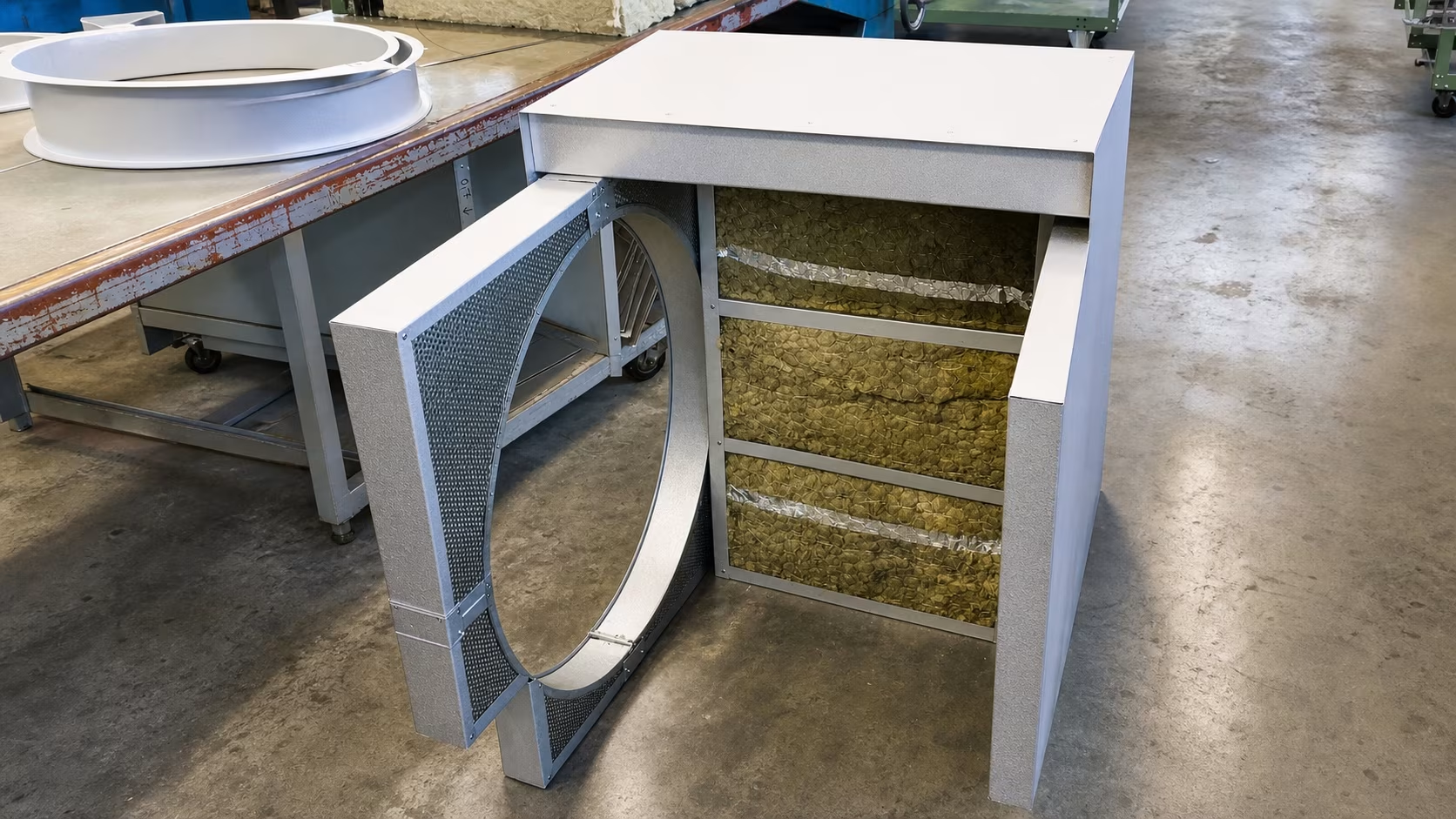
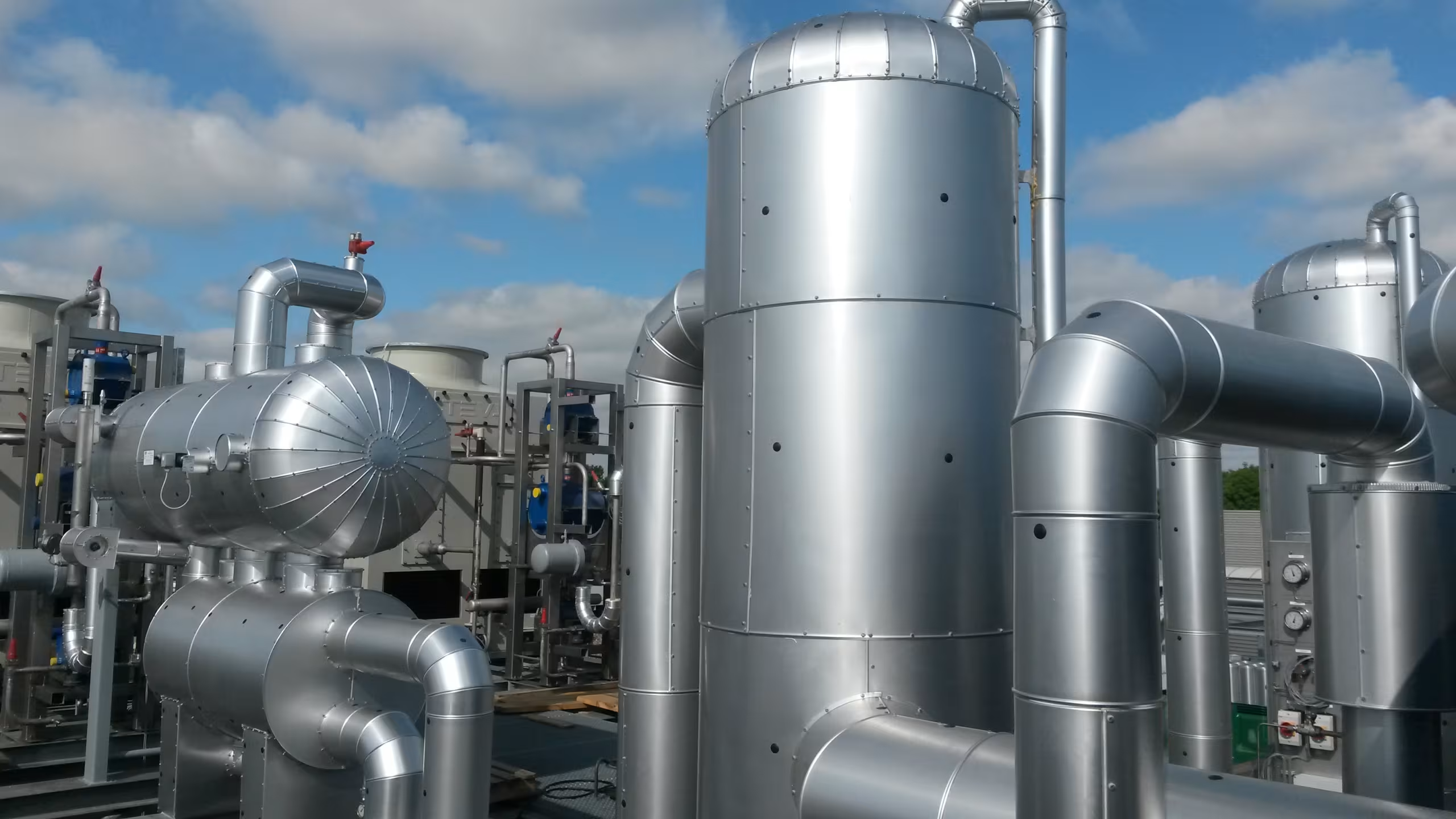
IVS manufactured several covers for our fire station, among them covers for radiators and equipment. In terms of surveying, execution, manufacturing and the final appearance the result is outstanding. Thank you for that on behalf of the Kummerow lakeside community. Genuine craftsmanship still exists here.
What is acoustic insulation?
Noise damages health and reduces efficiency in production. Technical acoustic protection reduces sound transmission from the source to the receiver — whether that is a pipe, a machine, a unit or an entire production area. The requirements for noise reduction at the workplace are rising, in terms of occupational safety law as well as economically, and protecting adjoining areas and neighbours is a concrete planning factor today too.
Our main focus is on sound-insulating measures on pipework, often the hidden sound amplifiers of an installation. Professional sound insulation noticeably reduces the noise exposure in the surrounding area: typical tasks in food production, mechanical engineering and compressed air and hydraulic supply. Enclosures for machine parts with silencers and acoustic barriers are part of it too, planned with an eye on acoustics and on access for maintenance.
Since 1984 we have been carrying out acoustic insulation for industrial operations and plant engineering companies, following the existing regulations and technical guidelines, with individual solutions at the workplace. In this way we make a substantial contribution to health and environmental protection and relieve staff and neighbours alike.
Where is acoustic protection used?
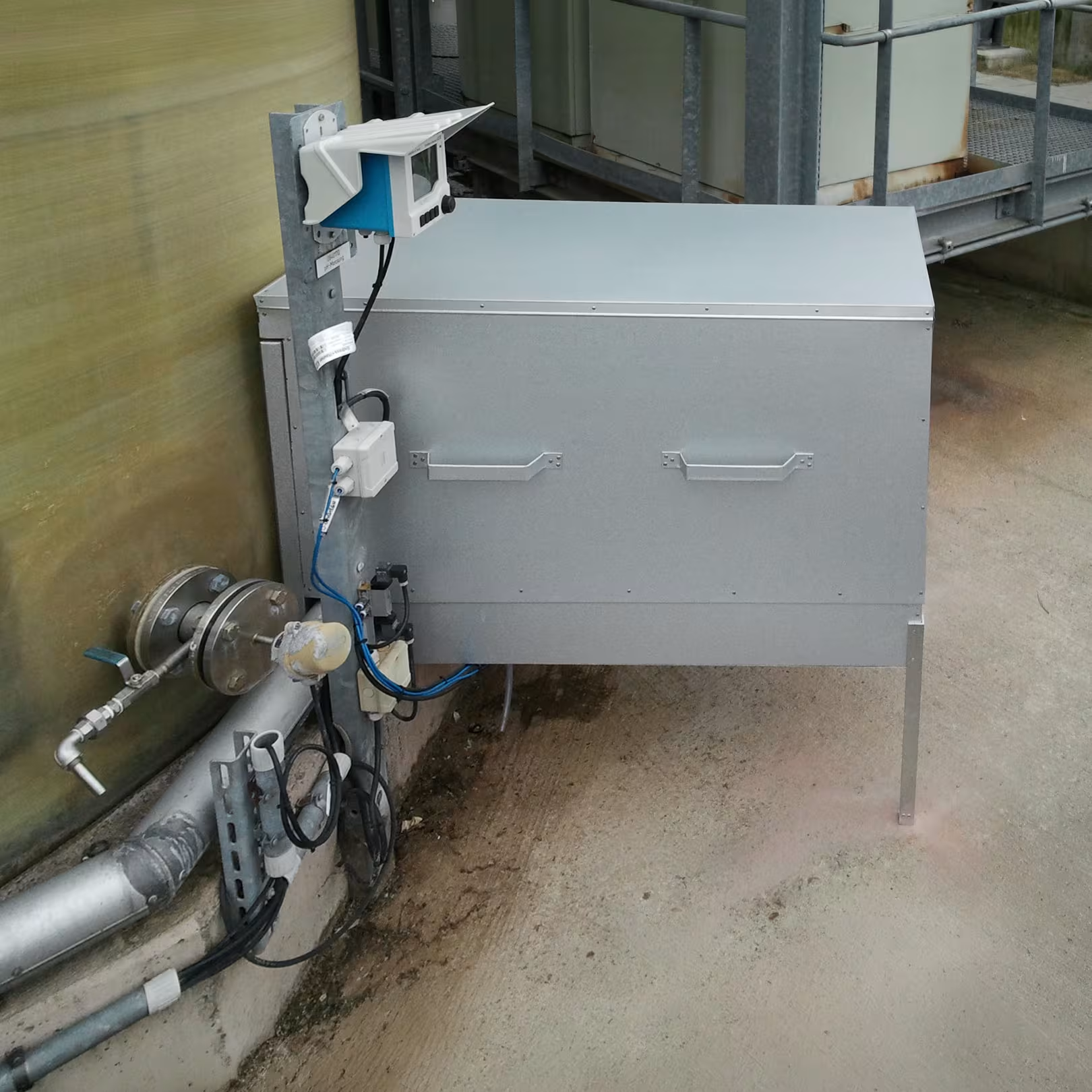
Sound insulation on pipework: compressed air, hydraulic, water and process lines often act as sound amplifiers that carry noise from one area into other rooms. We insulate these lines with structure-borne sound absorbing wraps and sound-insulating cladding sheets, so that the sound power decreases at the source instead of travelling through the entire building.
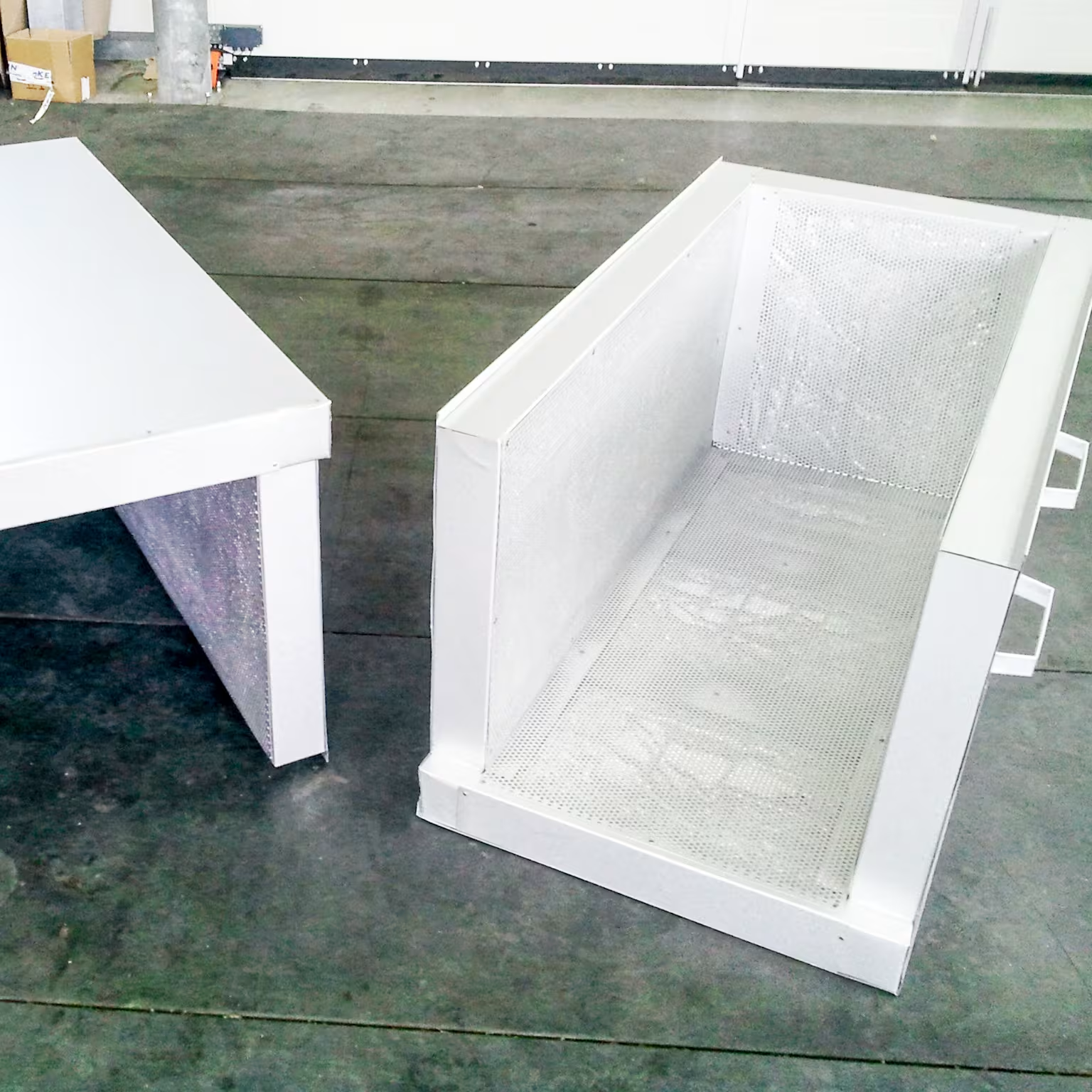
Machine enclosures and acoustic barriers: pumps, compressors, mills and other loud units are enclosed in acoustic cabins or separated from surrounding working areas by acoustic barriers. In doing so we pay attention to easy maintenance access, sufficient ventilation and clean seals at doors and transitions.
Silencers and ventilation runs: ventilation and air conditioning ducts often transmit considerable sound with the air flow. With inline silencers and acoustically lined ducts we reduce sound transmission through the ventilation system — important in food production, office buildings and clean rooms.
Individual solutions at the workplace: where standard solutions are not enough, we plan individual acoustic measures for specific workplaces, machines or runs. On-site surveying, precisely fitted prefabrication in Malchin and installation by our well-practised teams: everything from a single source.
Industries for acoustic protection
From food producers and plant engineering companies through breweries and logistics centres to biogas plants: wherever machines or pipework generate noise, we relieve the workplace with targeted acoustic measures.
-
Plant engineering
Prefabricated insulation systems for modules, skids and complete plants, straight from the IVS workshop in Malchin. V2A and V4A stainless steel cladding fitted precisely to your design and delivered ready for installation on schedule.
-
Beverage industry & breweries
Hygienic insulation for the brewhouse, lager cellar and CO₂ recovery, cleanable V2A cladding surfaces and stable process temperatures at full energy efficiency.
-
Dairy processing
Condensation-free insulation systems for CIP plants, pasteurisers and storage tanks. Cleanable V4A execution to HACCP requirements, feasible during ongoing dairy operation.
-
Logistics & cold storage centres
Energy efficiency and active fire protection for cold stores and logistics centres.
Insulation materials & products
In technical acoustic protection we use structure-borne sound absorbing insulation materials: heavy foam, acoustic mineral wool, heavy composite acoustic membranes and elastomeric decoupling elements. Which material is used depends on the frequency spectrum of the sound source and the desired reduction.
Cladding is done with high-quality sheet metal, acoustic barriers or combined cladding systems with a mass layer. Where required we supply the cladding parts from our own stainless steel prefabrication, particularly in food production, where hygiene requirements define the choice of material.
Our execution follows the recognised standards of the industry: AGI work sheets, the EU standard WKSB and the occupational safety requirements for noise exposure at the workplace.
The choice of material depends on the sound source, the frequency range, the medium temperature and the ambient conditions. Low-frequency sound needs different insulation materials than high-frequency flow noise, which is why we analyse the source first. We work with established manufacturers; data sheets, sound absorption values and classifications are provided on request to suit the acoustic planning of your project.
What our customers say
Voices from hospital operations and the hotel sector on acoustic protection.

Reduce noise at the source
A pump, a compressor or a pipe run: describe the source and the frequency spectrum to me. I will come back with a proposal for effective sound insulation, gladly combined with thermal or cold insulation.
As soon as noise in the working environment exceeds the limit values or sound from one area disturbs others, an acoustic measure is advisable. In production sites, plant buildings and food operations such measures are often mandatory. We help with surveying, consultation and precisely fitted execution.
Airborne sound is what we hear directly. On building components it turns into structure-borne sound, which is transmitted through walls, pipes and structures. Effective acoustic protection addresses both paths: absorption at the source, decoupling at transitions and a mass layer in the enclosure.
Heavy foam, acoustic mineral wool, heavy composite acoustic membranes and elastomeric decoupling elements, combined with cladding sheets of steel, aluminium or stainless steel. Which combination we recommend depends on the frequency spectrum of the source and the desired reduction.
Both are our daily business. We wrap pipework with structure-borne sound absorbing wraps and sound-insulating cladding sheets. Depending on the task, machines are surrounded by acoustic barriers or fully enclosed, always with an eye on maintenance access and ventilation.
In most cases, no. Acoustic protection can often be implemented on running installations. We plan the work steps so that production can continue.
We start with an on-site inspection, identify the relevant sound sources and paths and propose a combination of insulation, decoupling and enclosure based on that. Only then do we move on to material selection and surveying. This avoids solutions that merely mask the problem.
We offer both from a single source: from on-site sound source analysis through material selection to installation and documentation. On request we also work together with external acoustic planners who have already prepared a concept.
Our base is Malchin in Mecklenburg-Western Pomerania. We work throughout Germany and regularly in Denmark, the Netherlands, Belgium and Austria.